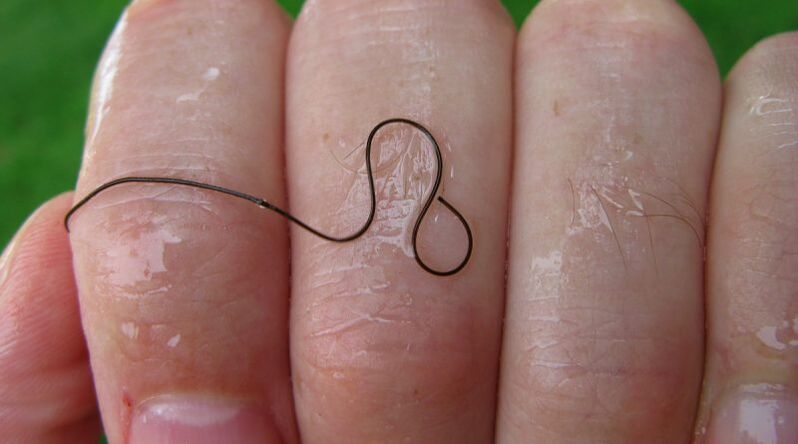
Helminthiasis is one of the problems that parents around the world face.This worm disease is a very serious matter that requires immediate action.It occurs due to the entry into the body of lower worms belonging to the group of parasites.They enter the human body in various ways and exist there, altering the functioning of various organs and systems.
The manifestation of the first symptoms of worms in children (see photo below) is very individual.The variety of symptoms is associated with a large number of types of parasites, each of which has its own characteristics and prefers to "settle" in its favorite places on the human body.
Most often, it is the child's body that suffers from a helminthic infestation.In addition, sudden increases in incidence usually occur in spring and summer, when children begin to play in the sandbox and eat fruit that is not always washed.The risk group includes children from infancy to 14 years of age.
What are the symptoms, treatment and prevention of worms in a child?The answer to these questions can be found in this article.
at-risk group
Worms affect humans due to the presence of several factors.To "settle" in the body, parasites need to enter the oral cavity.Here special enzymes found in saliva must fight against it.But if the parasites successfully overcome this barrier, they enter the stomach, which receives them with its aggressive environment.If the worms survive there, they enter the intestines, where they must be eliminated by immune cells.However, the human body is usually weakened.In this sense, it cannot completely combat parasites.This creates favorable conditions not only for worms to enter the human body, but also for them to remain in it.
The mechanism described above has not yet been established in children.That is why they are included in a special risk group.One contributing factor is the baby's desire to constantly savor the world around him.
When the parasite takes root in the body, it begins to absorb nutrients that enter the intestines and can also cause serious damage to internal organs.In this sense, the symptoms of worms in children are very often expressed in the form of exhaustion and general weakening of the body, the appearance of allergic reactions, delayed growth and low weight gain, as well as a delay in physical and mental development.
Causes of the disease
Parasites are known to be quite widespread in nature.Their eggs can be found in unwashed fruits and vegetables, in fish and meat, in water and soil, in animal skin, etc.
Symptoms of worms in children may appear when the baby eats dirty or undercooked food.In addition, a child with helminthiasis can also become a source of infection.In this case, the parasites are transmitted to a healthy baby through close contact with him.Infection can also be caused by pets that have not received anthelmintic treatment.
types of disease
Depending on the location of the parasites, helminthiasis occurs:
- Intestinal.These are taenaryngosis and enterobiasis, trichuriasis, strongyloidiasis and ascariasis.
- Tkanev.These include filariasis and toxocariasis, schistosomiasis and trichinosis.
- Pulmonary.These are tominxosis and paragonimiasis.
- Hepatobiliary tract.This type of helminthiasis includes fascioliasis, clonorchiasis and opisthorchiasis.
Depending on the type of pathogen, the disease is divided into:
- Cestorose.This type of disease occurs due to the penetration into the body of tapeworms such as broad tapeworm and pork tapeworm.
- Nematodes.This type of helminthiasis is caused by intestinal worms.Among them are whipworms, roundworms and pinworms.
- Trematodes.This type of disease is caused by trematode parasites.These include cat fluke, as well as lung and kidney fluke.
Negative consequences of helminthiasis.
Sometimes the symptoms of worms in children are expressed in the development of an acute allergic reaction in the form of anaphylactic shock or Quincke's edema.In addition, helminthiasis often causes intestinal perforation and obstruction.
Worms sometimes affect the liver and genitourinary organs, as well as the gastrointestinal tract.At the same time, they provoke the development of hepatitis, pyoderma, urinary incontinence and appendicitis.Often, against the background of helminthiasis, damage to brain structures occurs, strabismus develops, visual acuity decreases, vulvovaginitis and acute pulmonary failure occur.
Causes of parasites in babies.
Unfortunately, sometimes symptoms of worms appear in children under one year old.Considering that a baby comes into contact only with close people, the cause of his helminthiasis infection is simple non-compliance with hygiene rules by household members.Another danger of infecting babies with parasites lies in the presence of pets in the home.In cases where owners do not carry out timely prevention of parasites in animals, they expose their offspring to significant risk.
Insects can also become a source of parasite spread.They carry worm eggs on their legs and leave them on various foods.When eating, helminths enter the child's body.
One of the most common factors that lead to a baby becoming infected with worms is the presence of parasites in the mother's body during pregnancy.The larvae, carried by the bloodstream, reach the fetus by crossing the placenta.As a result, the child already has helminthiasis at birth.
Signs of worms in babies.
For parents concerned about their baby's health, a stool test is not enough to find out if they have helminthiasis.These studies are considered far from the most truthful.It is best for mothers and fathers to learn to recognize the symptoms of worms in a child.Although this is not very easy to do.In fact, during their long existence, parasites have learned to perfectly hide the signs of their presence in the human body.The symptoms of worms in children (see photo below) are very similar to those that appear during a viral illness or when there is a malfunction of the gastrointestinal tract.
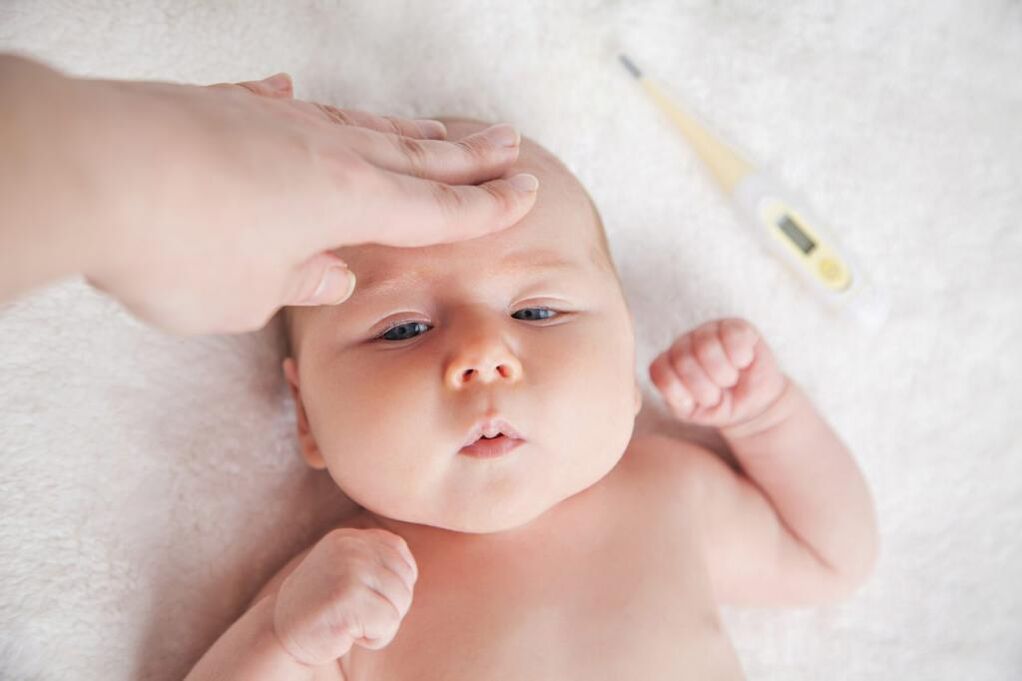
A child who suffers from parasites is completely weakened.He refuses to eat and sleeps restlessly.In some cases, the baby has a cough and fever.With prolonged exposure to parasites, immunity decreases and various allergic reactions develop.
How to understand that a child has worms?Symptoms in the form of pain in the navel, which is often caused by pinworms, parents can determine themselves.To do this, they must place the baby on their back and bend their legs at the knees, gently palpating the desired area of the abdomen.If there are pinworms, the baby will definitely show concern, indicating the discomfort that has appeared.In the same way, parents can even discover the place where individuals of this type of worms have accumulated.Pinworms also manifest as itching in the anus.Girls suffer from a burning sensation in the vagina.At the same time, her vaginal lips are swollen.
But as for intestinal worms, they do not show any external signs of their presence in the child's body.These worms are discovered only after they have woven into a ball.In this case, the child becomes seriously ill and develops an intestinal obstruction.
Elimination of helminthiasis in babies.
Of course, if symptoms of worms are detected in children, treatment of this disease must be started in a timely manner.However, achieving this at such a young age is not easy.After all, almost all drugs are intended for young patients from 2 years old.The symptoms of worms in children cannot be eliminated with these drugs, since they are very toxic and have a large number of similar effects.The correct treatment for parasites in babies can only be prescribed by an experienced doctor.The specialist will determine the stage of the disease and develop an individual regimen for taking the necessary medications.You must comply with it with special care.After all, even a slight deviation can lead to poisoning of a baby.
Doctors often suggest that parents delay treatment and wait until the child is older.However, sometimes a long period of inactivity leads to even greater weakening of the baby's body.That is why it is better to prevent infection.And to do this, parents will have to carefully monitor hygiene.
Causes of parasite infection at the age of 2-3 years.
What are the symptoms and treatment of worms in children who have become more independent?At the age of 2 to 3 years, children often suffer from intestinal worm infection.This can happen when:
- eat foods that have not undergone the necessary thermal and mechanical processing;
- non-compliance with rules regarding personal hygiene (for example, poorly washed hands);
- contact with companions or animals that are infected with parasites.
Symptoms of worms in 3-year-old or two-year-old children appear due to their inability to take care of their own safety.That is why it is so important for parents to pay constant attention to the hygiene and nutrition of their children.
Children attending daycare centers, kindergartens and playgrounds are also at high risk of infection.
Signs of helminthiasis at 2-3 years.
If a child has worms, what symptoms can his parents observe?
- Periods when the baby's appetite suddenly decreases or increases.But in both cases the child loses weight every day.
- Increased salivation.Children who suffer from parasites often wake up in the morning on a wet pillow.
- Itching that manifests itself in the anus.A similar symptom is characteristic of enterobiasis caused by pinworms.
- General malaise and lethargy.Such a baby becomes inactive and appears depressed.
- Stool disorder.Very often, parents can observe alternating diarrhea and constipation in their baby.
- Decreased immunity, as well as frequent acute respiratory viral infections.
- Blue circles under the eyes and pale skin.
- Pain in the navel area and nausea.
If one or more of the worm symptoms described above are detected in children, parents should take the child to the doctor.There is no point in postponing such a visit.In fact, over time, parasites can cause serious diseases of the digestive system.
Treatment of helminthic infestation at the age of 2-3 years.
During the course of pharmacotherapy, parents must take care of the order and cleanliness of the home.In this case, it will be necessary to pay the greatest attention to the child's compliance with hygiene rules.You should wash your hands only with soap or dry them with alcohol-free wipes.
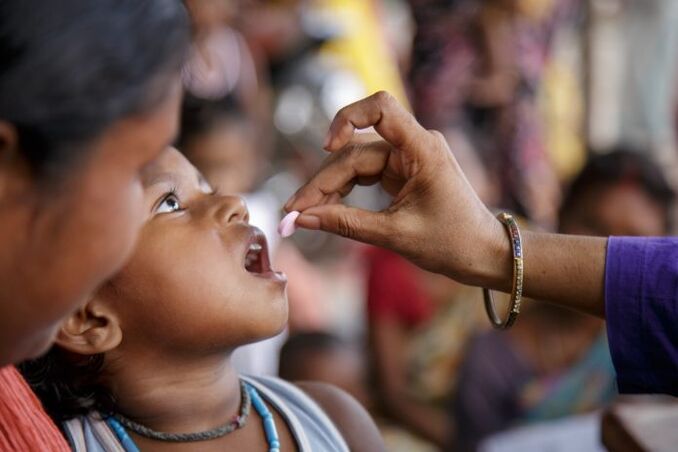
During treatment, parents should also limit the baby's stay in places where there are large concentrations of children.These are playgrounds, preschool educational institutions, sandboxes.Any contact with pets is prohibited during this period.Preventive measures to avoid reinfection will consist of washing and ironing the baby's bedding and underwear with a hot iron.Parents should not ignore their children's soft toys.You definitely have to wash them.
When prescribing a course of treatment, doctors select agents that have an anthelmintic effect.This group of drugs can have a toxic effect on a growing organism.That is why all products should be used only as prescribed by a doctor and in the dosage prescribed by him.
Reception of anthelmintic drugs causes mass death of parasites, which leads to an intoxication reaction in the baby.In this case, the child suffers from nausea, stool disorders and vomiting.It also develops pale skin.If such symptoms occur, parents should give their baby intestinal sorbents (for example, activated charcoal) for 3 to 4 days.
Causes of helminthiasis in older preschool children.
As children grow, they become increasingly physically active in an effort to explore the world around them.From 4 years old, a modern child can be considered an individual.After all, he has his own habits and tastes, showing an insatiable curiosity about everything around him.Their intensive contacts become the cause of parasitic damage.Worm larvae lie in wait for the baby in the fur of a pet, in the sand and soil, as well as on the surfaces of objects that the preschooler encounters.How to protect a little person?To prevent the manifestation of worm symptoms in children from 5 years old and even from 4 years old, it is necessary to teach them to be aware of the culture of their body, as well as to form a positive attitude towards a healthy lifestyle in children.
Already at the age of four, the child's body has developed a certain immunity that fights pathogenic microorganisms.But at the same time, the digestive system is not sufficiently resistant to the penetration of parasites.The intestine of a 4-year-old child has very thin walls and its blood flow is unstable.This contributes to the rapid reproduction of worm larvae in the body.
To prevent the appearance of worm symptoms in children and treatment is not required (see photo below), parents should take measures for comprehensive prevention of the disease.
They consist of observing personal hygiene rules, eating a healthy diet and periodic examinations in a medical center.
Signs of helminthiasis in older preschool children.
Of course, it is not always possible to keep track of a 4-5 year old child.This leads to the fact that in one form or another, helminthiasis manifests itself in almost all older preschool children.In this case, the child can observe:
- lack of appetite or its excessive increase;
- restless sleep, during which the baby grinds his teeth;
- enlarged lymph nodes;
- stool instability;
- frequent manifestations of allergic skin reactions;
- cutting pain in the abdominal area;
- itching in the anal area;
- attacks of nausea and dizziness;
- increased nervousness;
- exhaustion of the body.
Moms and dads who notice one or more of the signs described above should take their child to a parasitologist.
Treatment of helminthic infestation in older preschool children.
At this age, the child is still prohibited from administering many of the “adult” medications.After all, they are very toxic.
There is a special, complex and very effective remedy, the spectrum of action of which is directed against an important list of worms.It is recommended to combine these tablets with treatment with antihistamines.After taking an antiparasitic drug, it is necessary to take care of the restoration of the child's body.